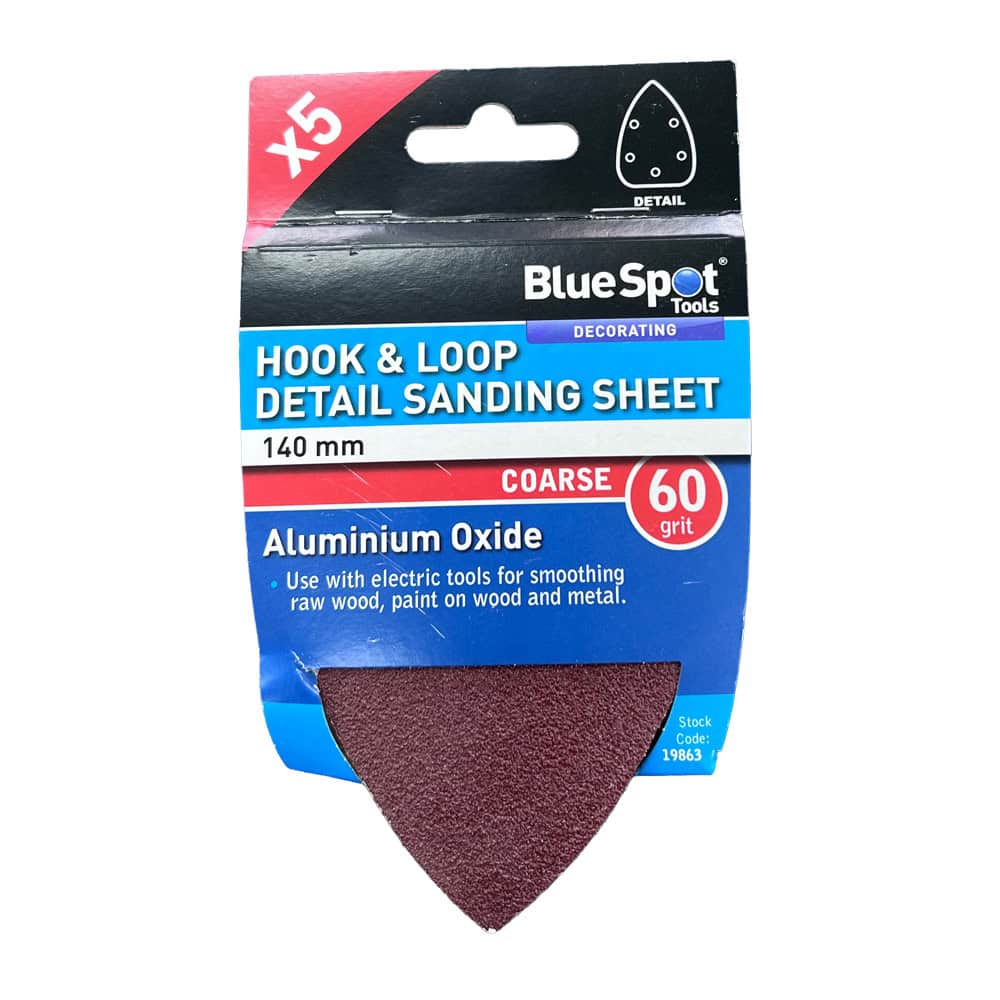

Hook & Loop Detail Sanding Sheets Coarse – 5 pack
This pack contains five coarse hook and loop detail sanding sheets for a compatible detail sander. A coarse abrasive is generally selected for earlier sanding stages or for work where more material needs to be removed than a medium or fine grade would address. Its use can leave visible sanding marks, so a coarser sheet is commonly followed by progressively finer grades where the desired finish requires it.
The product title confirms the abrasive is coarse, but does not state a grit number. Because abrasive grading and the requirements of different materials can vary, check the listing’s product details if you need an exact specification. Always choose a sheet based on the surface and the finish you want to achieve.
Useful for earlier preparation stages
The shaped detail format can help when sanding smaller sections, corners and edges. A detail sander can be easier to handle in restricted areas than a larger sanding machine, provided the sheet matches the backing pad and is suited to the job. Hook and loop backing allows the sheet to attach to a compatible pad and be replaced when it is worn or when you move to another grade.
Before sanding, remove loose dirt and check the surface for nails, fixings or other obstructions that could damage the abrasive or the workpiece. Secure the material and test the sheet on an inconspicuous area. Coarse abrasives can remove material quickly, especially on edges and corners, so use light pressure and short, controlled passes. Keep the sander moving to reduce the risk of creating hollows or uneven patches.
Plan the next sanding stage
A coarse sheet can leave scratches that may remain visible beneath paint, varnish or other finishes. Inspect the surface as you work, and plan to move through medium and fine grades if the project calls for a smoother finish. Before changing grades, clear away dust and loose abrasive particles. This helps prevent coarser debris from scratching the surface during the next stage.
Do not keep sanding with a sheet that is clogged, torn or worn. Replace it when its cutting action has reduced, rather than pressing harder. Excessive pressure can make it difficult to control the tool and may cause uneven sanding. Follow the instructions for the material and any coating or finish that will be applied afterwards.
Confirm your detail sander’s fit
Detail sanding sheets come in different shapes and sizes. Before ordering, compare the sheet dimensions and outline with the backing pad on your sander. Check the hook and loop arrangement and, if the tool uses dust extraction, confirm that the sheet’s holes match the pad. The wrong pattern may not attach securely or support effective dust collection.
The title supplied for this product does not identify dimensions, grit number, sheet shape or dust-hole layout. Please use the specification information shown on the product listing or ask us for help if you need to confirm these details.
Wear appropriate eye protection and a dust mask while sanding. Connect dust extraction if available and follow the tool maker’s safety instructions. Disconnect the sander before replacing a sheet. Use extra care when working with old paint, treated timber or materials that may produce hazardous dust, and follow the relevant safety advice.
The five-sheet pack provides a replacement supply of coarse hook and loop abrasives for compatible detail sanders. Use this grade only where a coarse abrasive suits the material and preparation task, then check the surface and progress through finer grades as needed for your chosen finish.